Clear Span Steel: How Far You Can Go Without a Post
Clear span means no interior columns: the rigid frame carries the whole roof to the side walls. It's why steel owns arenas, hangars, warehouses, and every building where a post in the middle would cost money every single day.
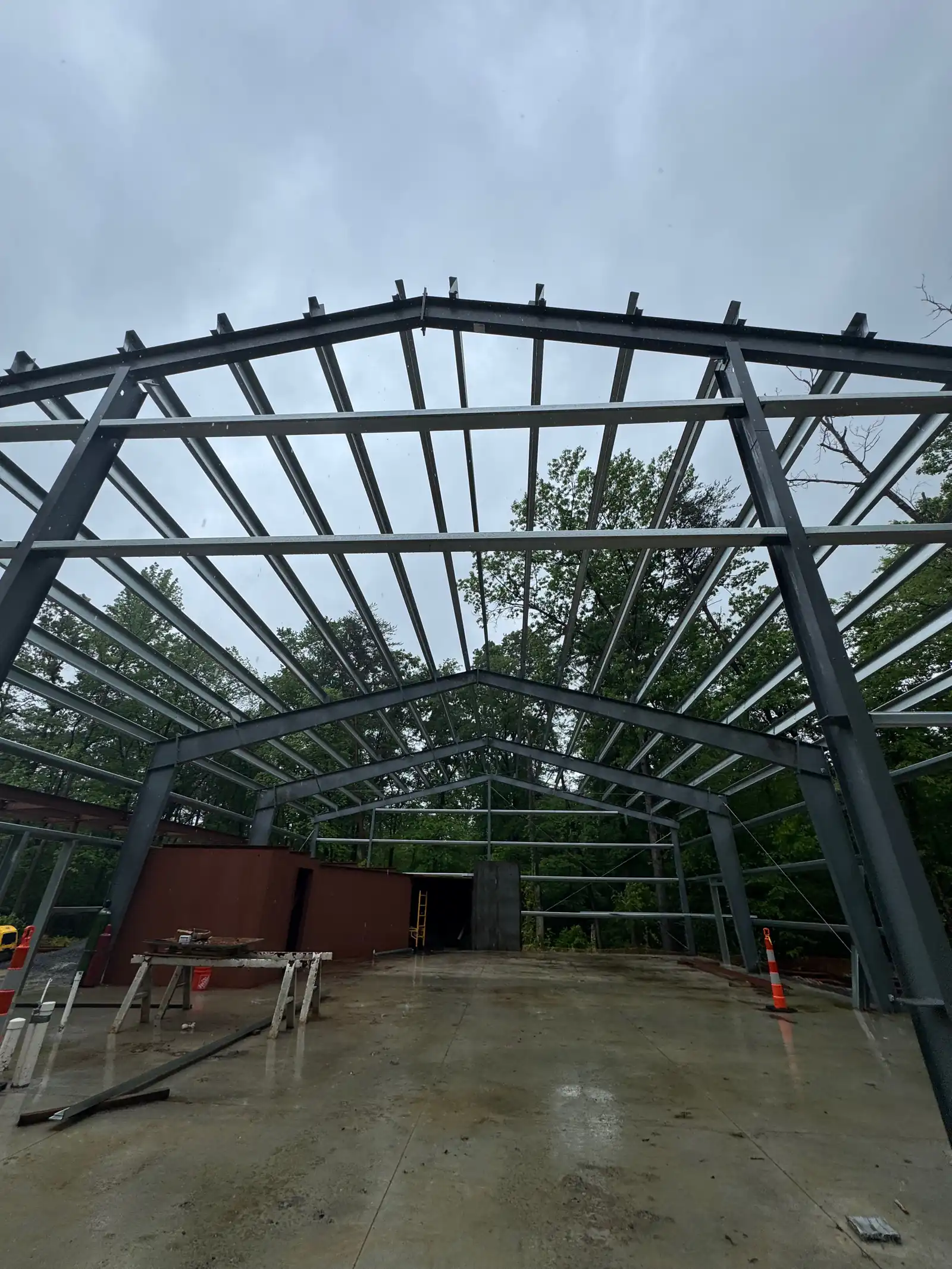
How far clear span goes
| Width | Feasibility (2026) |
|---|---|
| Up to 60 ft | Routine — standard frames, best $/sq ft |
| 60–100 ft | Common — deeper frames, moderate premium |
| 100–150 ft | Specialized — heavy frames, real engineering premium |
| 150+ ft | Possible (hangars, arenas) — custom structural design |
What clear span costs
Under 60 ft wide, clear span is essentially free — it's how rigid-frame kits are engineered anyway. Beyond that, expect roughly 10–25% more frame steel per additional 20 ft of width. Length is always cheap; width is the engineering variable.
Uses that demand it
- Equipment and implement storage (turning radius)
- Courts and recreation (a post ruins the floor)
- Warehousing (racking layout freedom)
- Aviation (obviously)
Design your building in 3D — free
Set the size, place every door and window, add a mezzanine, lay out the interior — then download a full drawing set and spec sheet. Free, and no phone call required.
Open the 3D Designer →Frequently asked questions
How wide can a clear span steel building be?
Standard rigid-frame kits handle 60–100 ft routinely; engineered designs reach 150 ft and beyond for hangars and arenas. Under 60 ft, clear span carries essentially no cost premium.
Why choose clear span over interior columns?
Columns are cheap steel but expensive floor — they constrain racking, equipment turning, and future reconfiguration forever. Most owners under 100 ft of width never regret clear span.